
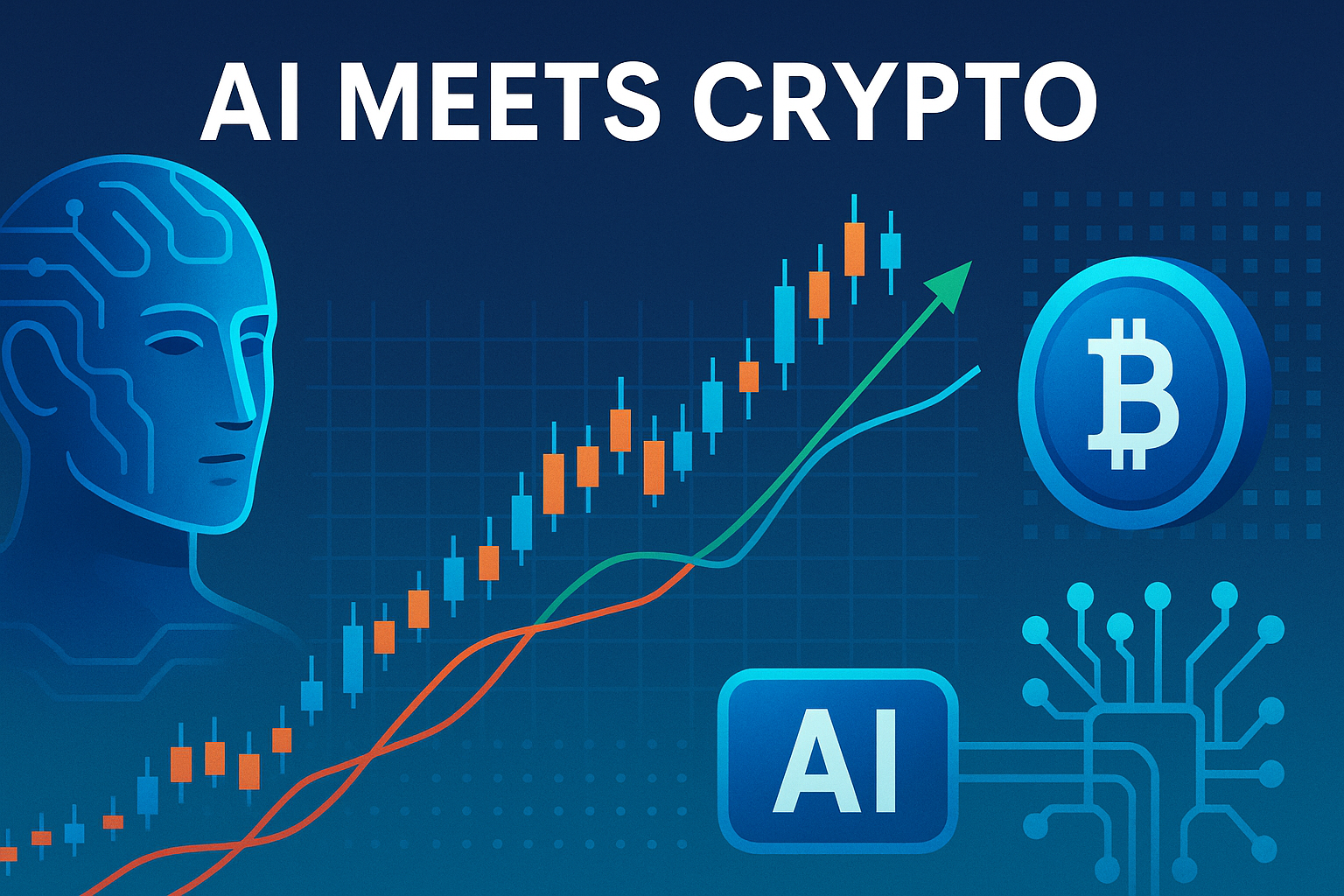
In 2025, artificial intelligence (AI) and blockchain technology are no longer separate revolutions — they’re converging. The fusion of these two powerful forces has given birth to AI-driven predictive trading, transforming the way investors analyze, forecast, and execute decisions in decentralized markets.
The integration of machine learning algorithms into DeFi ecosystems is creating a new paradigm of smart, self-learning financial systems that operate with minimal human intervention.
The Rise of Predictive DeFi
Predictive trading relies on AI algorithms that continuously learn from vast amounts of data — price movements, social sentiment, on-chain analytics, and macroeconomic indicators. These models predict short-term and long-term trends, enabling traders and protocols to act before the market moves.
DeFi platforms like Numerai, SingularityNET, and Fetch.ai have become pioneers in this new field. By combining decentralized data sources with AI processing, they create open, transparent, and highly accurate forecasting systems. Traders gain insights that were once available only to elite hedge funds.
How AI is Enhancing Crypto Markets
AI’s impact spans every layer of crypto markets:
-
Market Prediction: Neural networks identify price patterns and anomalies across multiple exchanges in real time.
-
Risk Management: AI models calculate optimal position sizes, hedges, and stop-loss levels automatically.
-
Sentiment Analysis: Natural Language Processing (NLP) engines interpret news, tweets, and community chatter to gauge market mood.
-
Liquidity Optimization: Smart bots rebalance liquidity pools in DeFi platforms for maximum efficiency.
These systems don’t just automate — they adapt and evolve, learning from each trade and refining strategies over time.
AI-Powered Decentralized Exchanges (DEXs)
A major innovation in 2025 is the emergence of AI-enhanced DEXs. These platforms integrate predictive models directly into trading engines, enabling users to benefit from automated market intelligence.
For instance:
-
Adaptive Market Makers (AMMs) now adjust liquidity parameters dynamically.
-
Predictive Order Matching minimizes slippage by anticipating order flow.
-
AI-Driven Arbitrage Bots exploit inefficiencies across blockchains faster than any human could.
The combination of AI precision and DeFi transparency is building the foundation for next-generation financial markets — open, data-driven, and self-regulating.
Ethical and Technical Challenges
While the benefits are immense, the rise of AI trading introduces new challenges:
-
Algorithmic Bias: AI models can unintentionally favor certain tokens or exchanges.
-
Data Privacy: Training models on decentralized datasets raises questions about ownership and access.
-
Regulatory Oversight: Governments are beginning to monitor algorithmic trading in DeFi for manipulation and compliance.
Balancing innovation with accountability will be key as the industry matures.
The Future: Self-Learning Financial Systems
By 2025, AI-native DeFi protocols are experimenting with autonomous liquidity management and self-adjusting interest rates. Imagine smart contracts that alter loan terms or staking yields based on real-time market predictions all without human input.
We’re witnessing the birth of “Cognitive Finance” an era where blockchain provides the infrastructure, and AI provides the intelligence. This synergy has the potential to outperform traditional markets in both speed and accuracy.
Conclusion
The convergence of AI and crypto marks the next great leap in digital finance. Predictive trading is more than an innovation it’s a redefinition of decision-making itself.
As DeFi and AI continue to merge, we move toward a world where markets become self-aware, data-driven, and highly efficient. The financial system of the future will think for itself — and it’s already learning fast.