
Elon Musk is hard to figure out. People often say this, and it may sound like a worn-out phrase, but it feels true every time. Since Walter Isaacson released his detailed biography on Musk in September 2023, the mystery around him has only grown. Today, Musk stands at around $500 billion in wealth, and his life continues to swing between big ideas, public fights, and endless work. His story stretches from a rough childhood in South Africa, during strict racial rule, to his recent arguments with NASA leaders and huge pay plans at Tesla.
Isaacson followed Musk closely for two years and filled more than 600 pages with a clear look into his life. He showed a young boy who learned pain early, a grown man who pushed himself to build companies many thought would fail, and a leader who can impress people one moment and stir chaos the next. Now, two years after that book came out, Musk is making news again — whether through space plans, heavy political talk, or new tech ideas. It feels like his life shows both human strength and human flaws, almost like a drama where the hero can also be his own enemy.
In this long guide, we will look back at Isaacson’s work and add all the new events since then, including Musk’s recent arguments over space contracts and the launch of xAI’s new project. If you follow Tesla, space travel, or modern tech, this breakdown is made for you. You won’t need to look anywhere else — everything you need to understand Musk’s world is here.
Shadows of Pretoria: The Childhood That Forged a Titan
At the start of Isaacson’s book, we are not taken to rockets or electric cars. Instead, we go to Pretoria, South Africa, in the 1980s. Elon Musk was born on June 28, 1971, to Maye and Errol. His mother worked as a model and nutrition expert. His father worked as an engineer. Elon grew up between two very different worlds — his mother’s calm and polished side, and his father’s angry and unstable side.
Young Elon did not fit in at school. He was small for his age and did not understand social signals well. Kids noticed this and targeted him. He was beaten badly more than once. In one attack, a group of boys pushed him down stairs and kicked him until he passed out. Later, he told Isaacson, “If you have never been punched in the nose, you don’t know what it teaches you about life.”
But school was not the worst part. His father, Errol, cast a long shadow. After his parents split when Elon was eight, he lived with his father for a time. Errol could be charming and smart, but he often turned angry and controlling. He liked to talk about strange theories and once sat in the kitchen in only underwear, spinning a toy roulette wheel to test if microwave energy would change it. He also became obsessed with number patterns and odd ideas. Elon once said, “I don’t know how he went from being a great engineer to believing strange stuff, but he did.”
This hard childhood shaped Musk deeply. South Africa was tense and divided by race laws at the time. Elon felt trapped and wanted out. At 17, he left for Canada, then later moved to the United States. He wanted space to think big and build a new life.
Main points from his early years
- Harsh school life: Being bullied made him tough but also shaped his sharp temper at times.
- Complicated father: Smart but unstable, his father gave him both engineering skills and emotional scars.
- Escaping through imagination: Elon read science fiction and played role-playing games to escape real life and dream big.
- Starting from zero: When he reached Canada, he worked rough jobs, like moving grain at a lumber mill. He earned little, but it taught him survival and grit.
Today, many of his public stand-offs can be traced back to that childhood fire. For example, his loud argument on X in late 2025 with a U.S. government official over space plans sounded like the same stubborn boy refusing to bow to anyone. As Isaacson wrote, Musk learned early that pushing through pain was his only way forward.
From Zip2 to PayPal: Building His First Wins in Tech
After leaving South Africa, Musk first studied at Queen’s University in Canada, then later moved to the University of Pennsylvania. He finished degrees in physics and economics in 1997. He got into Stanford for a PhD, but quit after two days. The internet boom had begun, and he wanted to build things instead of staying in school.
In 1995, Musk and his brother Kimbal started Zip2. It was an online city guide for newspapers. They slept in the office and showered at the YMCA to save money. Four years later, in 1999, Compaq bought the company for $307 million. Musk walked away with about $22 million at age 27.
Next came X.com in 1999, an online banking startup. It later became PayPal after a merger. During that time, Musk and his team fought over control of the company. While he was on his honeymoon in 2000, the board removed him as CEO. Even so, he stayed involved and made a huge return when eBay bought PayPal in 2002 for $1.5 billion. Musk received around $180 million from that sale.
These early wins were not simple luck. Musk viewed business like a puzzle to solve. He looked at money, time, and risk like parts of a math problem and pushed until things worked.
Quick timeline of Musk’s early career
- 1995: Starts Zip2. Lives in office to save money.
- 1999: Sells Zip2. Begins backing early electric car tech ideas.
- 1999–2002: Builds X.com, which becomes PayPal. Survives big tech crash.
- 2002: After PayPal is sold, becomes one of the youngest rich founders in tech.
Looking back now, those years seem simple compared to today’s tech world. Many people who worked at PayPal back then went on to start other major tech companies. Today, Musk still acts with the same mindset from those days. For example, in September 2025, he bought $1 billion worth of Tesla stock to show he still believes in the company even while facing policy pressure in the electric car industry.
Tesla: The Fight to Build Electric Cars

In Isaacson’s book, the most intense point comes in 2008. Tesla was almost out of money. Musk had just gone through a divorce and was raising five young boys. He then put nearly all the money he had — about $40 million — into Tesla to keep it alive. At the same time, his rocket company SpaceX was also struggling. When one investor refused to back Tesla and even tried to push Musk out as CEO, Musk changed plans and took on debt instead. That move saved Tesla. Without it, the company would have died, and electric cars might have taken much longer to become common.
Musk later said, “You had to go through hell to get to Tesla.” The book shows how hard the early years were. He slept on the factory floor, fired senior staff when things stalled, and pushed forward with driver-assist software even when critics said it was risky. It was rough and chaotic, but it worked. The Model S came out in 2012 and people loved it. Then came big factories in Nevada, China, and Texas.
By 2025, Tesla hit record sales in the third quarter, helped by Cybertruck shipments and U.S. tax breaks. But Musk also made a political move in 2024 by spending heavily on candidates who were not friendly to electric cars. That move hurt Tesla later when government rebates dropped, costing the company money. Meanwhile, Tesla’s walking robot, Optimus, first shown in 2021, is planned to work in factories by 2026. Musk also claimed in late October 2025 that Tesla’s latest driving software is safer than human drivers.
Key points about Tesla’s progress
- Model 3 struggle (2017–2018): Musk pushed to build 5,000 cars a week. He slept in the factory again. Tesla later reached half-a-million yearly deliveries, and the stock once hit a trillion-dollar value.
- Battery Day (2020): New battery design promised lower costs. By 2025, battery packs are about 20% cheaper, which could help Tesla sell a $25,000 car by 2026.
- Self-driving shift: Robotaxi reveal moved to October 2025 in Austin. Musk says this could become a massive business if it works.
- Issues: Pressure from labor unions and lower profit margins in late 2025 due to price cuts.
Musk once said that if 2008 had gone differently, Tesla might not exist — and neither would the modern electric-car movement. Today, more than six million Tesla cars are on the road. But competition from China and global policy fights still make the future uncertain.
SpaceX: Big Rockets and the Push for Mars
Isaacson writes that SpaceX is the company closest to Musk’s heart. Musk started it in 2002 using money he made from PayPal — around $100 million. The first three rocket launches failed between 2006 and 2008. One more failure would have shut the company down. Then a fourth try worked. Soon after, NASA signed a $1.6 billion deal in 2008 to support cargo missions to space. That deal kept SpaceX alive. By 2010, its Dragon capsule reached the International Space Station.
In 2015, SpaceX landed a Falcon 9 booster back on Earth. Most people did not believe a rocket could return safely and be used again. That moment changed spaceflight forever. Then came Starship in the 2020s — a giant rocket meant to lift huge loads and someday fly people to Mars. Musk talks often about humans living on Mars by around 2030.
Isaacson also writes about the 2022 Ukraine situation. Reports said Musk limited Starlink service during a military operation near Crimea. Musk denied that and said the system was simply not active there.
By 2025, SpaceX is moving closer to helping NASA land astronauts on the Moon. The lander is based on Starship and is planned for the Artemis III mission, now tracking for 2027. When a U.S. official questioned the deal in late 2025, Musk got angry on X and said they were trying to “kill NASA.” On October 30, SpaceX shared a post showing a simpler Moon mission plan to speed things up. Musk says SpaceX has paid for most of Starship on its own. The company launched 144 rockets in 2024, up from 31 in 2022.
Starship vs. NASA’s SLS
| Feature | SpaceX Starship | NASA SLS (Artemis) |
|---|---|---|
| Payload to low Earth orbit | ~100–150 tons | ~27 tons |
| Cost per launch | About $2–10M target | About $2–4B |
| Can it be reused? | Yes, both stages | Mostly no |
| How many people it could carry | Around 100+ (future goal) | 4–6 crew |
| Mars plans | Built with Mars trips in mind | Not built for Mars |
| 2025 Status | Latest version tested; Moon lander parts almost ready | Artemis II shifted to Sept 2026 |
SpaceX is building Starship so it can launch often, carry a lot, and bring rocket parts back to fly again. Musk wants this system to support permanent bases on the Moon and then Mars.
The Twitter Takeover: From Twitter to X
In October 2022, Musk bought Twitter for $44 billion. The deal felt sudden and bold. Isaacson says it was chaotic from day one. Musk cut most of the staff — almost 80% — and pushed the tech team so hard that some systems broke and took months to fix. During this time, reports also came out claiming Musk had a role in limiting Ukraine’s access to Starlink during the war. The book also notes that Musk struggled with sadness and stress after his breakup with Amber Heard.
In 2023, Musk renamed Twitter to X and said he wanted to turn it into an app that could do everything — social posts, payments, video, and more. He added his AI tool, Grok, to the platform. By 2025, things stayed loud and messy. The company’s ad chief left after less than a year as many brands pulled ads. Musk even took legal action against some companies that stopped advertising. On October 27, he launched Grokipedia, which he called a cleaner version of Wikipedia run through his AI company.
Politically, Musk spent large sums during the 2024 election cycle and later made peace with Donald Trump after public fights earlier in the year.
X in 2025 — Good and Bad
Good:
- Around 600 million users
- Grok drives higher user activity
- Musk says the app protects free speech
Bad:
- Revenue down by about half since the buyout
- Many advertisers left
- Fines in Europe over harmful content
Isaacson writes that Musk’s behavior online and his political tone have moved toward the extreme side of the right. He says Musk had the chance to truly support open speech but instead created more division. By 2025, Musk’s open support of Trump made that view even stronger.
xAI and Neuralink: AI and Brain Tech
Musk sees artificial intelligence as his biggest mission. He helped start OpenAI years ago but later left. In 2023, he launched xAI to build his own systems. The company made a chatbot called Grok. A newer version, Grok-1.5, scored well in tests. In early 2025, Musk tried to buy OpenAI for around $97 billion, and even talked with Mark Zuckerberg about teaming up. The offer did not work out.
Neuralink is Musk’s other big tech effort. It works on chips that go into the brain. In 2024, the company placed a device in a human for the first time. By 2025, more than 20 people with paralysis were joining trials. The goal is simple but huge — let people move a cursor or type using only their thoughts.
Simple look at Musk’s AI beliefs
- Musk often says AI could harm people if not handled well.
- He says xAI will try to stick to facts and avoid limits that other companies place on models.
- In 2025, xAI launched Grokipedia pages on well-known political figures, and Musk claimed they would not be filtered.
- Some experts worry xAI could still show bias.
- Musk once joked about a “robot army” while defending his pay plan, which sparked more debate.
Family, Weaknesses, and Personal Struggles
Musk has eleven children with three women. He has a strained relationship with one of his daughters, Vivian, who changed her name and cut ties with him. Isaacson points to Musk’s shifting moods and compares them to his father’s behavior. After his breakup with Amber Heard in 2018, Musk went through long periods where he shut down emotionally. In 2025, he and Grimes continued a public court fight over their children.
Where Musk struggles (from Isaacson’s view)
- Big ego: Paid too much for Twitter and has public fights with powerful groups, including NASA in 2025.
- Cold in high-pressure moments: Known for firing top staff without warning. A chief financial officer at X left in October 2025 after sudden tension with Musk.
- Trying to improve: His charity group, the Musk Foundation, has funded projects in science and education. In one recent example, he gave $10 million to a mental-health program at the University of Texas.
2025: Huge Money Goals and Political Moves
In 2025, Musk reached a new wealth record. In early October, his net worth passed $500 billion. A big moment is coming in November: Tesla shareholders will vote on a pay plan that could be worth $1 trillion if Tesla’s value climbs to $8.5 trillion. Tesla board chair Robyn Denholm warned that if investors vote “no,” Musk may leave the company.
Musk also warmed up again to Donald Trump after earlier public fights. People online even guessed that Musk might take a role in a new Trump plan if he returns to office. SpaceX pushed a simpler plan for the Moon program, and Musk said his robot, Optimus, could help with everyday tasks, including caring for pets, thanks to self-driving tech.
Key news from October 2025
- Oct 29: Labor groups said Musk’s $1 trillion pay idea is “too much” and unfair.
- Oct 27: Musk launched Grokipedia and said he wants to remove false info online.
- Oct 24: Musk agreed to pay $128 million to settle a lawsuit from former Twitter leaders.
- Oct 23: Musk argued again with U.S. official Sean Duffy; SpaceX offered a new plan to fix Moon mission issues.
Musk and Other Big Tech Figures
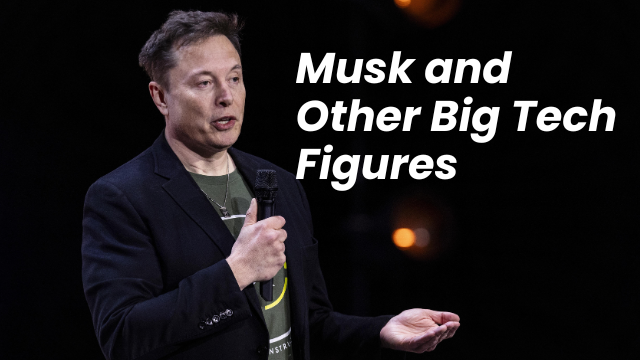
Isaacson compares Musk to Steve Jobs. Both pushed people hard and forced bold ideas into reality. Both could be rough on others and often ignored feelings in the room. The difference is focus. Jobs built one huge company. Musk runs several at once — cars, rockets, satellites, robots, brain chips, and social media.
Books About Musk (Simple Table)
| Book | Writer | Year | Pages | What it does well | What it misses | Price (2025) | Reader Score |
|---|---|---|---|---|---|---|---|
| Elon Musk | Walter Isaacson | 2023 | 688 | Inside access; strong detail; covers recent events | Feels too soft on him at times | $20 (hardcover) / $14.99 ebook | 4.3/5 |
| Elon Musk: Tesla, SpaceX… | Ashlee Vance | 2015 | 392 | Fast read; great early story | Stops before Twitter and xAI | $15 (paperback) / $9.99 ebook | 4.1/5 |
| Power Play: Tesla | Tim Higgins | 2021 | 400 | Deep view of Tesla fights and board drama | Almost only about Tesla | $18 (hardcover) / $12.99 ebook | 4.2/5 |
| Battle for the Bird | Kurt Wagner | 2024 | 416 | Covers the messy Twitter takeover and X changes | Light on Musk’s early life | $22 (hardcover) / $14.99 ebook | 4.0/5 |
| Liftoff | Eric Berger | 2021 | 320 | Great view of early SpaceX wins; strong tech detail | Not much on Musk’s personal life | $16 (paperback) / $11.99 ebook | 4.4/5 |
Which one to read?
- Best full story: Isaacson
- Best for Tesla fans: Higgins
- Best for space fans: Berger
- Best early-life story: Vance
- Best for the Twitter/X saga: Wagner
The Complex Figure: Pride, Future, and Open Questions
Isaacson hints at something without saying it loudly: Musk can rise very high, but sometimes hurts himself by pushing too far. You can see it in big choices — like paying $44 billion for Twitter when the price did not make sense, or making bold public fights in 2025 that brought more rules and pushback onto his own companies. Still, he has a long record of surviving tough moments. He kept Tesla alive in 2008 when it looked finished, and in 2025 SpaceX kept moving ahead with plans for the Moon.
A hard question sits at the center of Musk’s story: does his personal struggle drive progress, or does it come at the cost of how he treats others? The same childhood escape worlds — science fiction and fantasy games — helped shape his dream of life on other planets. But those dreams sometimes come with sharp edges, and feelings can get lost along the way.
Looking at 2025, people still ask where Musk stands. As he grows closer again to Trump’s circle, some wonder if he will support open public debate or slide into the same angry and suspicious thinking that marked parts of his father’s behavior.
In the end, the story is not simple. Great achievements often come from hard lives and rough paths. Musk built much through pressure and stress. The rest of us watch the results, feel the heat from his drive, and try to make sense of both the gains and the damage.
Where to Buy and Book Prices
| Format | Hardcover | Paperback | eBook | Audiobook | Notes |
|---|---|---|---|---|---|
| Isaacson book | $20 | $18 (2024 print) | $14.99 | $24.99 | Read by Isaacson, long listen (20+ hours) |
| Vance book | — | $15 | $9.99 | $19.99 | Newer print in 2017 with small updates |
| Higgins book | $18 | $16 | $12.99 | $22.99 | Extra detail for Tesla fans |
| Wagner book | $22 | — | $14.99 | $25.99 | Covers Twitter/X changes through 2025 |
| Berger book | — | $16 | $11.99 | $20.99 | Focus on SpaceX early years |
Prices from Amazon and Barnes & Noble as of Oct 31, 2025.
Buying Isaacson’s Musk book with his Steve Jobs book often gives a bundle discount.