

India is growing fast in banking, insurance, housing finance, and auto finance. Foreign banks are buying large stakes in Indian banks, Indian groups are taking full control of insurance ventures, Gulf money is entering housing finance, and Tata Motors has bought an Italian auto brand. This guide breaks down the top banking deals in India, big finance investments, and global moves by Indian firms.
India’s financial market is in a strong phase. Big lenders from abroad are taking major stakes in banks here. Indian business houses are gaining full ownership in insurance. Gulf firms are putting money into housing lending. And Indian companies are buying global auto brands. These are not random deals. These moves point to deep trust in India’s economy and stable outlook.
Many people search for terms like India banking deals, India finance deals, Indian bank stake sale, housing finance investment India, and bank deal news in India today. For all of them, this cycle is a clear sign that global and local players see long-term value here.
Industries covered include banking, insurance, home finance, and automobiles. Let us break down what changed, who invested, and why this period matters.
India Financial Deal Snapshot
| Year | Total Deal Value | Foreign Stake Deals | Major Sectors |
|---|---|---|---|
| 2023–2024 | Rising | Yes | Banking, Housing, Insurance, Auto |
This quick look alone tells a story: India is attracting steady global capital, and domestic firms are building strength. Banks, finance firms, and auto giants are now central to this shift.
Foreign Banks Place Big Bets on India
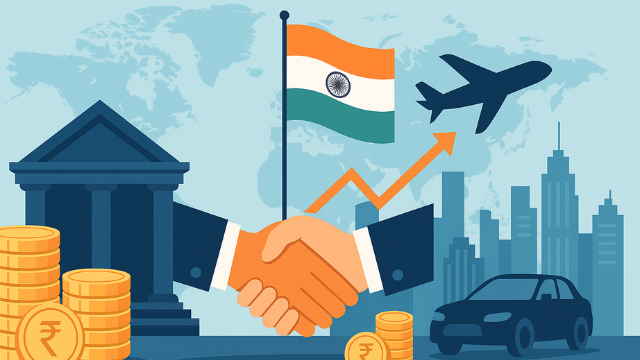
A major moment came when Emirates NBD bought sixty percent of RBL Bank for about three billion dollars. This was not a test investment. It was a full entry into the Indian banking system. The scale was large enough to catch attention across Asia.
Soon after, Japan’s SMBC purchased around one-fourth of Yes Bank for nearly one point six billion dollars. Many search for why foreign banks are investing in Indian banks. The reason is simple. India has:
- Rising credit demand
- A digital banking backbone
- A young base of earners
- Urban and small-town loan growth
- Solid retail banking potential
Then came Blackstone, taking nearly ten percent in Federal Bank. When a top private fund enters banking, it reflects analysis, not noise. Blackstone does not buy on emotion. It buys when the long-term picture looks steady.
Together, these deals show steady trust in Indian banking growth. Overseas banks and funds believe India offers a larger, stronger loan market than many global regions right now. Search terms like big bank deals in India and latest bank acquisitions in India climbed because of these moves.
Indian Groups Take Charge in Insurance
Another major trend is full ownership in insurance. The Bajaj Group bought the twenty-six percent stake held by Allianz for almost two point eight billion dollars. This gave Bajaj total control of its insurance venture.
This matters because insurance in India is still early in its growth. Families now seek life cover, health plans, and long-term savings. More people trust insurance now than ten years ago. Search terms like insurance stake sale India and insurance market India news rose after this deal.
Why full control? Indian groups want to build their own brand identity and decide how customers are served. They want full say in claims, products, and digital reach.
More business houses may follow this path. Insurance in India is still opening up, and growth is steady as incomes rise.
Gulf Money Helps India’s Home Loan Story
Housing finance saw a big move too. International Holding Company (IHC) from Abu Dhabi bought above forty percent in Sammaan Capital for nearly one billion dollars. That shifted interest toward Gulf investment in the Indian finance and housing loan market, and India investment searches.
India has strong home-buying growth due to:
- Young families
- Rising jobs
- Small-city development
- Better income stability
- Desire for owned homes over rented
Housing lending suits long-term investors because payments come month after month, for many years. It is stable and tied to real growth in daily lives.
This is not speculative money. This is patient capital backing real demand.
Tata Motors Buys Iveco and Steps Up in Europe
Outside finance, a major business move came when Tata Motors bought Iveco in Italy for roughly three point eight billion dollars. This situation caught global attention, leading to search queries like Tata Motors global acquisition news and Indian auto global purchase.
Why it matters:
- Auto tech is changing fast
- EV and clean fuel tech are key
- Global markets give scale and brand value
Tata Motors did not wait for tech to enter India slowly. It secured capability and brand power abroad. This adds muscle to India’s manufacturing and transport industry.
It also proves a point: India is not only receiving global investment; it is also going overseas to grow.
Why These Deals Are Happening
These moves did not come by chance. India has built a stable base:
- Stable finance rules
- Digital systems like UPI
- Improved bank balance sheets
- A young working class
- Rising middle-class homes
- Steady GDP
- Growing small and mid-size business lending
- Active digital lending
Searches like India economy investment news, global interest in Indian markets, and corporate acquisitions in India come from these trends. Compared to many global markets with slow growth, India stands firm.
Banks are clean, customers are digital-first, and loan demand is deep. That explains why investors search for banking sector investments in India and why more foreign banks keep entering.
What This Means for Normal People
These deals touch everyday life. How?
- Home buyers may see faster approval and more loan choices.
- Savings and insurance buyers may see simpler plans.
- People opening bank accounts may see smoother service.
- Mobile banking will improve even more.
- Service quality will rise as global systems merge with Indian scale.
Many users search Indian financial sector growth, and this phase brings better access to money for:
- Households
- Self-employed workers
- Small shops
- Startups
- First-time home buyers
- Students and young wage earners
Better capital means easier growth for people and firms.
What Investors Should Note
Foreign banks are not placing small bets. They are placing long bets. This supports confidence in Indian banks and finance firms.
Investors who follow India M&A deals, major finance deals in India recently, and banking industry in India latest news know this cycle is not shaky. Banks, lenders, and insurers are likely to stay strong on market interest because real growth is powering these deals.
What Comes Next in India Finance and Business

Based on current signals, we may see:
- More foreign banks are buying into mid-size lenders
- Indian groups are gaining full control of insurance brands
More private funds backing home loans and NBFCs - Housing finance firms scaling deeper across states
- Indian companies buying tech brands abroad
- Auto and EV partnerships are rising
Searches like the future of the finance sector in India, deals trend and latest banking acquisitions in India explained are likely to rise as more deals unfold.
India is growing as both a capital magnet and a global buyer.
Deal Value Table (Reference)
| Deal | Value (USD Billion) |
|---|---|
| Tata Motors, Iveco | 3.8 |
| Emirates NBD, RBL Bank | 3.0 |
| Bajaj Group, Allianz JV | 2.8 |
| SMBC, Yes Bank | 1.6 |
| IHC, Sammaan Capital | 1.0 |
| Blackstone, Federal Bank | 0.70 |
Final Thoughts
India is in a strong phase across banks, finance, housing credit, and manufacturing. Foreign capital is entering with confidence. Indian firms are taking bold steps abroad. The pattern is clear; this is a steady shift, backed by real demand, digital strength, and young workforce power.
India is not only a fast-growing market. It is also becoming a global player in capital and industry. Global investors trust India. Local groups are scaling abroad. And common people will see more access to money, services, and tech.
This is a grounded and long-term growth phase.
Frequently Asked Questions About India’s Banking, Finance, and Corporate Deals
Q1. Why are foreign banks buying stakes in Indian banks?
Answer: They see long-term loan demand, strong digital banking, stable rules, and a young working population. India offers growth that many other markets do not right now.
Q2. Which major foreign players invested in Indian banks recently?
Answer: Emirates NBD invested in RBL Bank, SMBC invested in Yes Bank, and Blackstone bought into Federal Bank. These are serious, long-term commitments.
Q3. What was the big insurance move in India?
Answer: Bajaj bought the stake held by Allianz and took full control. It signals that Indian firms want full say in insurance growth and service.
Q4. Why is Gulf money entering Indian finance?
Answer: India’s housing finance and credit market offers steady returns and rising demand. Gulf funds trust India due to old trade links and long-term stability.
Q5. Why did Tata Motors buy Iveco?
Answer: To secure global tech, talent, and brand reach. It helps India stay ahead in EV and mobility markets, instead of waiting for slow tech inflow.
Disclaimer:
This article is for informational and educational purposes only and should not be considered financial, investment, or business advice. The deal values, examples, and market insights are based on publicly available information and may change over time. We are not registered with SEBI, RBI, or IRDAI as investment or financial advisors. Readers should consult a qualified financial professional before making any financial or investment decisions.