
China’s trade surplus is one of the most-watched topics in global economics. When the country reports strong export numbers, it affects markets, trade policy, and business decisions around the world. In recent years, China has reached record levels of trade surplus, raising questions about how it got there, what it means for its partners, and how long this trend can continue. This guide explains everything in a clear and practical way so readers can understand the full picture without searching for extra sources.
What a trade surplus means for China
A trade surplus happens when a country sells more goods abroad than it buys from other nations. For China, this is not new. What is new is the size of the gap. As global demand shifts and production networks change, China has become a central exporter of manufactured goods, electronics, machinery, and daily-use items. This steady strength has helped China support its economy during slow periods at home.
China uses its trade surplus to bring in cash, support its currency, and strengthen its position in world trade talks. A large surplus also gives China more room to negotiate with big partners like the United States and the European Union.
Why China’s surplus has grown so much
Several factors explain the sharp increase in China’s trade surplus in the past few years.
1. Strong manufacturing base
China has built a system that can produce goods in large numbers at stable prices. Factories in many provinces work with long supply chains that keep costs low and output steady. This advantage matters even more when demand shifts quickly, such as during global slowdowns or supply chain stress.
2. Soft demand at home
While exports have risen, buying at home has stayed slow. Growth in income, housing, and spending has not kept pace with earlier years. When local demand is weaker, factories rely more on selling abroad, which widens the surplus.
3. Changes in global demand
Markets outside the United States, such as Southeast Asia, Africa, Latin America, and parts of Europe, have become strong buyers of Chinese goods. Even when one region cuts back, others often increase their orders. This keeps total exports supported.
4. Trade shifts with the United States
Tensions between the two countries have changed what China sells to the United States. Some goods have moved to other regions. Some production has been rerouted. Yet China has kept total export numbers high because buyers in other areas continue to place strong orders.
How do other countries react to China’s trade surplus?
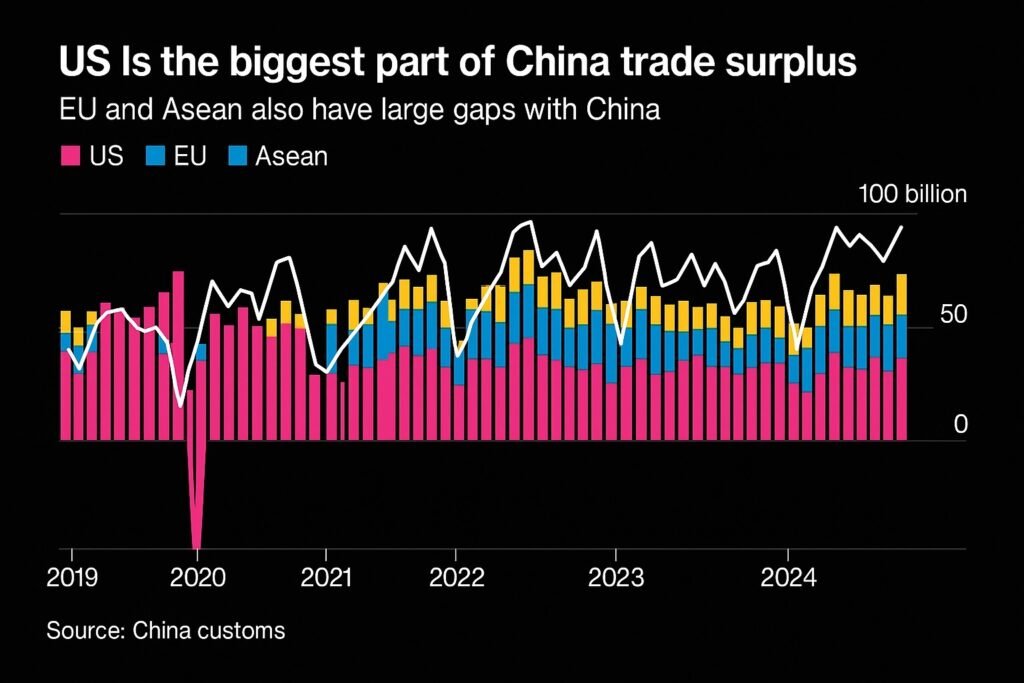
A large trade surplus brings stronger attention from China’s partners.
1. United States
The United States has long argued that the trade gap with China affects jobs and industry growth at home. This has led to tariffs, negotiations, and ongoing talks about fair competition. Even with these steps, many American companies still rely on Chinese suppliers because of cost and scale.
2. European Union
Europe has raised concerns about the growing gap in trade as well. Leaders in several countries warn that Europe may need to introduce new trade steps if the gap keeps widening. At the same time, European firms continue to source parts and products from China for their own industries.
3. Developing nations
Many developing economies benefit from importing low-cost goods. At the same time, some of them worry about losing local industries. This mix of gain and concern creates a complex balance in their trade ties with China.
How the surplus shapes China’s economy
1. Support for currency and reserves
A steady flow of cash into the country supports the value of China’s currency and adds to its foreign reserves. These reserves help the country manage market swings and maintain financial stability.
2. Impact on growth targets
Exports help China reach its yearly economic goals. When housing or spending at home drops, exports often help fill the gap.
3. Pressure to adjust policies
A very large surplus can also place pressure on China. Some partners call for policy changes. Some ask for more buying from China or better access to the Chinese market. These talks shape future trade rules.
Will the China trade surplus stay high?
The future of China’s trade surplus depends on global demand, local spending, and trade relations.
Some experts think export strength will continue because China can produce at a low cost even in slow periods. Others believe the surplus may shrink if demand weakens in major markets or if more countries introduce trade steps.
China’s own plans to boost spending at home may also reduce the surplus over time. If people buy more imported goods, the gap may narrow.
What this means for businesses and investors
Companies that work in global supply chains watch China’s trade surplus closely. A strong surplus can signal stable production and steady prices. It can also highlight trade risks if countries respond with new rules or taxes.
Investors follow these trends to understand currency moves, stock market changes, and shifts in demand for raw materials.
Readers who want to explore related topics can look at guides on global supply chains, export market trends, and regional trade agreements. These areas connect directly to China’s trade position and help build a deeper view of the full system.
Stay updated with our daily trade and market coverage. Visit our main page at toptradetrends.com
Disclaimer:
This article is shared only for general learning. It is not financial, trade, business, or investment advice. The details in this post come from public data and news reports that may change with time. We do not claim that all figures will stay the same or that future results will match the trends mentioned here. We are not linked with SEBI, RBI, or any other financial body as advisors. Readers should check all facts on their own and speak with a trained expert before making any choice related to trade, markets, or money.